How Card Games Improve Strategic Thinking and Decision-Making

Card games have entertained human civilization for centuries, evolving from simple social pastimes into complex, mentally demanding endeavors. Beyond their obvious entertainment value, card games serve as a dynamic training ground for the human mind. Every shuffle of a deck introduces an astronomical number of potential card combinations, creating a fluid environment where incomplete information and shifting odds dictate success. Engaging regularly with card games forces players to think several moves ahead, weigh potential consequences, assess risk, and adjust strategies instantly.
Unlike games with complete information, such as chess where both players can see every piece on the board, card games inherently involve hidden information. Players must navigate uncertainty, analyze subtle clues dropped by opponents, and make calculated choices under pressure. This unique structural framework makes card games an exceptional tool for honing practical strategic thinking and decision-making skills that directly translate to everyday life.
The Cognitive Foundations of Strategic Card Play
To understand why card games are so effective at building mental acuity, it helps to examine the underlying cognitive processes involved in a single hand. Playing a strategic card game activates multiple regions of the brain simultaneously, requiring a blend of memory retention, numerical calculation, pattern recognition, and tactical adaptability.
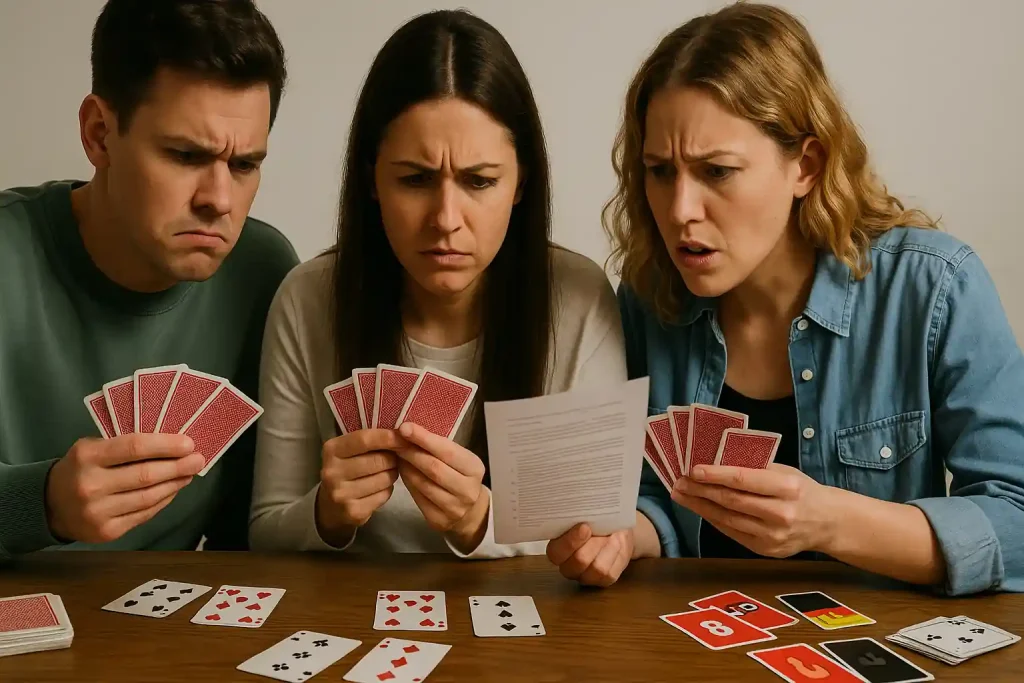
When a player holds a hand of cards, their brain immediately begins filtering possibilities based on established rules and dynamic variables. They must remember which cards have already been played, calculate the remaining probability of drawing a specific card, and infer what opponents might hold based on past actions. This constant mental effort strengthens executive functioning, which includes working memory, flexible thinking, and self-control. Over time, practicing these cognitive tasks builds sharper mental habits that make complex problem-solving feel far more intuitive.
Building Advanced Analytical and Probabilistic Thinking
At its core, strategic decision-making relies heavily on probability and risk management. Card games teach players to view decisions through the lens of expected value rather than emotional impulses or hindsight bias.
-
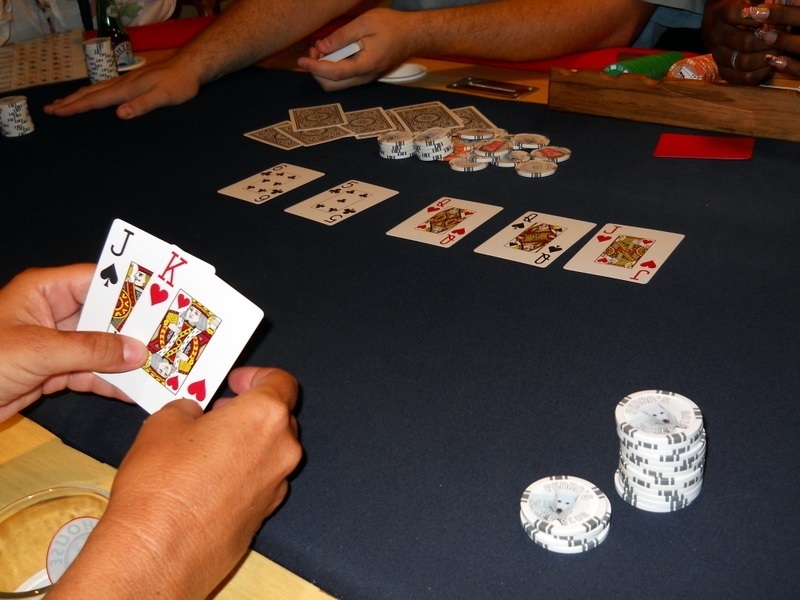
Probability Assessment: Whether calculating the odds of completing a flush in poker, forming a run in rummy, or drawing a favorable card in bridge, players must evaluate numerical likelihoods in real time. This conditions the mind to estimate probabilities quickly under pressure.
-
Managing Hidden Information: Because cards are dealt face-down or hidden in opponents hands, players learn to make choices based on incomplete data. They deduce unknown variables by observing bidding patterns, discarding choices, and decision speeds.
-
Risk versus Reward Evaluation: Every wager, discard, or play involves balancing potential gains against potential losses. Strategic card play trains individuals to take calculated risks when mathematical odds are favorable and to play defensively when odds turn against them.
-
Eliminating Hindsight Bias: A poor outcome does not always mean a decision was incorrect, just as a lucky outcome does not automatically validate a bad play. Card games help players separate decision quality from immediate results, fostering a disciplined analytical mindset.
Developing Long-Term Planning and Strategic Foresight
Success in sophisticated card games rarely comes from short-term plays or immediate gratification. Winning requires formulating a long-term strategy while remaining flexible enough to adapt when circumstances change.
Games like contract bridge, duplicate poker, and deck-building card games require players to plan sequences of moves well in advance. A player might deliberately sacrifice a high card early in a trick-taking game to force an opponent into playing their strongest suit, setting up a winning streak several turns later. This practice of delayed gratification directly reinforces strategic foresight.
Strategic foresight involves setting a primary objective, anticipating how opponents will respond, and developing contingency plans. When a player realizes their primary strategy is compromised due to an unlucky draw or an unexpected move by a competitor, they must pivot instantly without losing composure. This balance between long-term vision and agile short-term execution mirrors the strategic planning required in executive leadership, financial investing, and project management.
Enhancing Emotional Intelligence and Behavioral Observation
Decision-making is not purely a mathematical exercise; human emotion and behavior play a massive role in competitive outcomes. Strategic card games act as an intense environment for developing emotional intelligence, self-regulation, and interpersonal observation.
Reading opponents is a foundational skill in competitive card play. Players carefully observe subtle cues, such as decision speed, body language, physical posture, and playing habits. Inferring an opponent confidence level or detecting a bluff builds sharp situational awareness and empathy. Players learn to construct mental models of how other people think and react under stress.
Equally important is managing one’s own emotional state. Experiencing a sudden streak of bad luck, often referred to as tilt, can lead to impulsive, irrational decisions. Card games teach players how to maintain emotional discipline, stay objective during setbacks, and execute sound strategy regardless of temporary frustrations. Maintaining composure under pressure is an invaluable skill in contract negotiations, conflict resolution, and high-stakes leadership settings.
Adaptability and Tactical Agility in Dynamic Environments
Static plans rarely survive contact with real-world complexities, and the same principle applies to card games. A strategy that worked perfectly in one round might become completely useless in the next due to a fresh shuffle or a shift in table dynamics.
Card games continuously push players into novel situations. As new cards are drawn and revealed, the state of the game changes completely. Players must constantly re-evaluate their positions, throw out outdated assumptions, and adopt fresh tactics. This continuous feedback loop builds high cognitive flexibility, which is the ability to switch between different concepts and adapt thinking to new, unexpected information.
By regularly placing players in evolving scenarios where quick adjustments are rewarded and rigidity is penalized, card games cultivate a dynamic mindset. Individuals accustomed to these shifts become far more comfortable with ambiguity, complex problem solving, and rapid tactical pivots in their professional and personal lives.
Real-World Applications of Card-Based Decision Skills
The strategic habits learned at the card table extend far beyond recreational gaming. Leaders, entrepreneurs, investors, and military strategists have long drawn parallels between card game theory and real-world execution.
In business and finance, market conditions are frequently volatile and filled with hidden variables. Executives must make capital allocation decisions using incomplete data, much like a poker player choosing whether to call a bet on the river. The risk-management framework cultivated through card play prevents over-leveraging on low-probability bets while encouraging bold action when odds favor success. Furthermore, the ability to read negotiation partners, anticipate competitive moves, and stay calm during market fluctuations directly stems from the same mental muscle memory developed through strategic card gaming.
Frequently Asked Questions
How do card games differ from board games like chess in developing decision-making skills?
Chess is a game of complete information, meaning both players can see the entire board and all available pieces at all times. Card games involve hidden information and randomness, forcing players to deal with uncertainty, calculate probability, manage risk, and deduce unknown variables, which closely resembles real-world decision-making.
Can casual card games like Go Fish or UNO build strategic thinking skills?
While simple card games introduce basic concepts like turn-taking, color matching, and basic counting, they offer limited strategic depth. Games with deeper mechanics, such as bridge, poker, rummy, spades, or modern deck-builders, provide much greater cognitive stimulation and require advanced strategic planning.
How do card games help prevent cognitive decline as people age?
Engaging in complex card games stimulates multiple cognitive domains, including working memory, pattern recognition, spatial reasoning, and processing speed. Regularly challenging the brain with these mental exercises builds cognitive reserve, which helps maintain sharp thinking and memory function as adults grow older.
What is the concept of tilt, and how does overcoming it improve real-life decision-making?
Tilt refers to a state of emotional frustration or confusion caused by bad luck or poor outcomes, leading to irrational and impulsive choices. Learning to recognize and control tilt during card games builds emotional self-regulation, helping individuals stay calm, objective, and analytical during stressful real-life situations.
How does playing card games improve a person risk management skills?
Card games force players to constantly evaluate risk versus reward based on mathematical odds and incomplete information. By practicing when to take calculated risks and when to fold or play defensively, players develop a disciplined framework for making sound financial, career, and personal decisions.
Are trick-taking games like Bridge or Spades better for strategic thinking than betting games like Poker?
Both game types train different strategic skills. Trick-taking games emphasize long-term planning, partnership communication, card counting, and precise sequencing. Betting games focus more heavily on probability estimation, risk management, reading human behavior, and managing hidden information.
How often should someone play card games to experience cognitive benefits?
Regular mental engagement yields the best results. Playing strategic card games for a couple of hours two to three times a week provides consistent cognitive exercise without causing mental fatigue, helping to sharpen memory, analytical thinking, and decision-making over time.