Card Game Strategies That Can Improve Your Winning Chances
Card games have captivated players across cultures for centuries. From traditional table games like poker and blackjack to classic trick-taking games like bridge or rummy, card games present a unique mix of skill, probability, psychology, and chance. While luck dictates which cards you are dealt, long-term success is determined by how well you play your hand and make strategic decisions under pressure.
Winning consistently at card games requires much more than simply memorizing the rules. Successful players rely on proven tactical principles, mathematical reasoning, disciplined bankroll or point management, and sharp observation skills. By implementing structured strategies, you can minimize the impact of bad hands, capitalize on favorable situations, and significantly improve your overall win rate.
Mastering Probabilities and Mathematical Foundations
At the core of every card game is probability. Standard decks contain fifty-two cards divided evenly into four suits and thirteen ranks. Understanding basic card distribution gives you a mathematical framework to evaluate risk and make informed choices.
-
Counting Known Cards: Pay close attention to cards that have already been played, discarded, or revealed on the table. Tracking known cards narrows down the possibilities of what remains in the deck or in your opponents hands.
-
Calculating Odds and Outouts: In games like poker, calculating your outs, which are the unseen cards that will complete a winning hand, helps you determine whether calling a bet is mathematically profitable over time.
-
Understanding the House Edge: In casino card games like blackjack or baccarat, every rule variant carries a specific house advantage. Choosing games with optimal rules and minimal house edge lays the foundation for strategic play.
Core Tactical Approaches Across Popular Card Games
Different card games require distinct tactical mindsets. Adapting your strategic approach to fit the specific mechanics of the game you are playing is essential for success.
Blackjack: Executing Basic Strategy
Blackjack is one of the few casino card games where player decisions directly alter the outcome of every hand. Basic strategy is a mathematically calculated system that dictates the optimal decision, hit, stand, double down, split, or surrender, for every possible combination of your hand and the dealer upcard.
-
Always Respect the Dealer Upcard: If the dealer shows a weak upcard like a four, five, or six, they have a high probability of busting. In these situations, avoid taking unnecessary risks and let the dealer bust.
-
Master Pair Splitting Rules: Always split aces and eights. Splitting aces gives you two strong chances at hitting twenty-one, while splitting eights breaks up a weak hand of sixteen into two workable hands. Never split tens or tens-value cards.
-
Manage Double Down Opportunities: Double down on strong starting totals like eleven when the dealer shows a weak upcard to double your potential profit on favorable deals.
Poker: Position, Patience, and Aggression
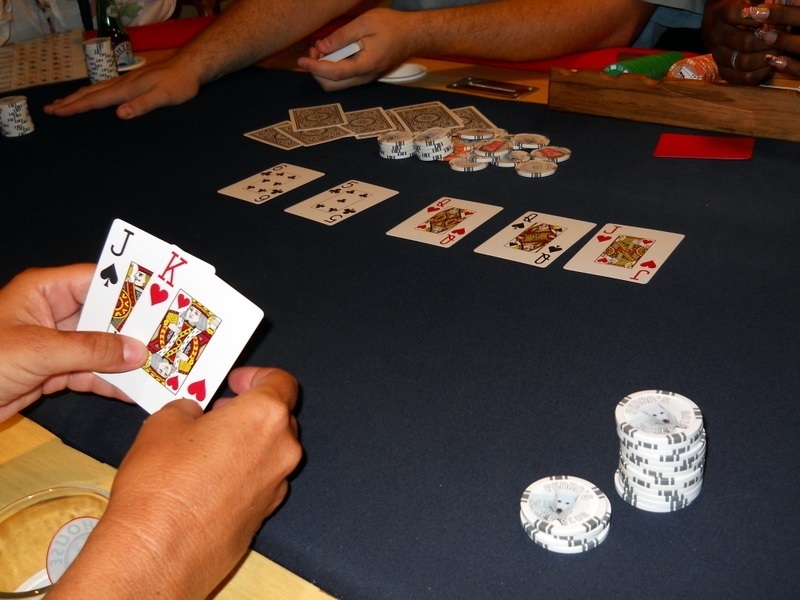
Poker is a game of incomplete information played against other human opponents rather than the house. Strategic poker play relies heavily on positional advantage, selective hand selection, and calculated aggression.
-
Leverage Positional Advantage: Acting last in a betting round provides invaluable information. You get to observe how your opponents act before making your decision, allowing you to control the size of the pot or execute effective bluffs.
-
Maintain Starting Hand Discipline: Folding weak starting hands pre-flop is the easiest way to prevent costly mistakes later in the hand. Patience pays off when you wait for strong starting cards in favorable positions.
-
Apply Controlled Aggression: Betting and raising puts pressure on your opponents and forces them to make mistakes. Checking and calling passively lets opponents control the action and see cheap cards.
Rummy and Trick-Taking Games: Discard Strategy and Memory
In games like rummy, hearts, or spades, managing your hand and reading your opponents play style are vital skills.
-
Discarding High-Value Cards Early: In meld-based games like rummy, holding onto unmatched high-value cards like kings or queens increases your point penalty risk if an opponent goes out quickly.
-
Watching Opponent Pickups: Take note of which cards your opponents pick up from the discard pile. This reveals what sequences or sets they are building, allowing you to hold back cards that would help them complete their melds.
-
Controlling the Tempo: In trick-taking games like spades or bridge, leading with specific suits at the right moment can deplete your opponents trump cards and secure late-game tricks.
Psychological Strategy and Reading Opponents
In games played against other people, psychological awareness is just as important as mathematical odds. Observing physical tells, betting habits, and decision times gives you insight into your opponents state of mind and hand strength.
Recognizing Patterns and Habits
Most casual players exhibit predictable habits. Pay attention to how quickly an opponent bets when they hold a strong hand versus when they are uncertain. Track how often a player folds under pressure or how frequently they attempt to bluff. Identifying these behavioral patterns lets you exploit their tendencies later in the match.
Controlling Your Own Image and Emotions
Just as you observe others, sharp players are watching you. Avoid developing predictable routines. Varying your play style occasionally makes you harder to read. Furthermore, controlling your emotions is mandatory. Giving into frustration after a bad beat leads to poor decisions, hasty wagers, and rapid losses.
Bankroll and Risk Management
No strategy guarantees a hundred percent win rate. Variance, the natural swing of luck over short periods, affects even the best players in the world. Proper bankroll management ensures that a cold streak will not eliminate your playing funds.
-
Establish a Dedicated Playing Fund: Only play with funds set aside specifically for entertainment or gaming. Never use money required for essential living expenses.
-
Set Clear Session Limits: Define strict win and loss limits before starting a gaming session. Walking away after hitting a predetermined profit goal protects your gains, while stepping back after reaching a loss limit prevents emotional chasing.
-
Adjust Stake Sizes to Bankroll Size: Keep individual bets or buy-ins to a small percentage of your overall bankroll, typically between one percent and five percent. This buffers your balance against natural statistical swings.
Frequently Asked Questions
What is the most important skill to develop for card games?
Observational skill combined with mathematical awareness is the most critical foundation. Being able to track cards already played while observing opponent behavior allows you to make decisions based on actual data rather than guesswork or emotion.
Can card counting completely eliminate the house edge in blackjack?
Card counting can shift the mathematical advantage slightly in favor of the player, usually between zero point five percent and one point five percent, when executed flawlessly alongside basic strategy. However, modern casinos mitigate card counting through continuous shuffling machines, deep deck cuts, and strict table limits.
How do I handle a bad streak of luck in poker or rummy?
During a losing streak, stick strictly to fundamental strategy, lower your table stakes, or take a temporary break from playing. Emotional frustration often leads players to relax their hand requirements or play overly aggressive, which worsens losses.
Is basic strategy in blackjack hard to learn for beginners?
Basic strategy is straightforward once you understand its structure. It is presented as a grid chart comparing your hand total against the dealer upcard. Practicing with free online training tools or strategy cards helps build muscle memory quickly.
What does it mean to play in position in poker?
Playing in position means you are among the last players to act in a betting round. Acting later allows you to observe how other players act, giving you extra information to make smarter bets, raises, or folds.
Why is keeping track of discarded cards so important in rummy?
Tracking discarded cards shows you which cards are no longer in the deck, preventing you from waiting for cards that cannot be drawn. It also tells you which suits or sequences your opponents are building so you do not accidentally discard cards that help them win.
Should beginner card players start with free play before wagering real money?
Yes, practicing on free play platforms or casual games with friends allows beginners to learn rule mechanics, test different strategies, and build confidence without risking financial capital.